Fiction – The Dawn of Amber

by John Gregory Betancourt

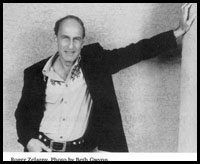
Betancourt was authorized by the Zelazny estate to write a new trilogy of Amber novels; this one about the founding of Amber. This explains the title page, which actually reads Roger Zelazny’s The Dawn of Amber. Amber is not the first property where continuations have been authorized by estates of authors, nor is it likely to be the last.

The intent (according to the jacket) is to answer questions about the founding of Amber, about the origins of Oberon and Dworkin, and why Amber and the Courts of Chaos are in conflict. Betancourt tackles the assignment with energy.

The story plunges straight into action with the main character Oberon (called “Obere” initially) fighting hell-creatures. Dworkin, whom he regards as an uncle but who has been absent from Obere’s life for years, shows up to help him fight these monsters. Dworkin conveys him well away from that conflict, through strange lands, to their destination: Dworkin’s castle Juniper.

Obere learns that he is, in fact, one of Dworkin’s sons. It’s a large family of very diverse personalities, each with different ambitions. He is plunged into power games and war conflicts of which he knows very little. But he becomes committed to his new world.

Inevitably, there is a contrast between Betancourt’s handling of the material and that of Zelazny. Betancourt lays out the plot and action in a way that can satisfy Zelazny’s readers. But the greatest distinction between the two authors (at least in this material) is stylistic. Betancourt does not have Zelazny’s hand for prose – that special quality that carries an author’s voice. Because for me as a reader Amber is very much Zelazny’s, I found myself conscious of the differences between the two authors at times.

I felt that Betancourt labored a bit too hard to echo Zelazny. He opens with Obere being as clueless about his real identity as Corwin is in Nine Princes in Amber (although the reasons for the cluelessness are adequately different). The introduction of the siblings is also similar, right down to the engaging but over-looked brother (Random in Zelazny’s work, Aber in Betancourt’s). I could wish for fresher plotting than that. But aside from that glitch, readers familiar with Amber should be satisfied with this first volume in this trilogy, if only for a fresh dose of Amber.

Posted in Fiction | Tagged , , , | Leave a comment

Fiction – To Green Angel Tower


by Tad Williams

The final volume of Williams’ Memory, Sorrow and Thorn unrolls the climactic confrontation with the hostile immortal Storm King, whose spirit rages against his exile from all living things. This pending confrontation has loomed over all three volumes and now the author brings it to the forefront. The vast canvas of Williams’ world and his many subplots are pulled together where the story began, within the walls of the fortress, the Hayholt.

Crucial to the wrap-up of this epic adventure is the final transformation of Simon into a leader and hero. Because Williams rightly knows that victories come with costs, Simon endures torture and the struggles of being lost in a subterranean maze. He gains wisdom into human nature by being pared down to his own essential nature.

If there is one minor flaw to this volume, it is that many of the key moments that explain or reveal the signifincance of events are told after the fact rather than experienced as they happen. However, considering that Williams tracks a large number of characters and several threads of action, using the “telling, not showing” method to wrap up some details is not a deal-killer. He builds the actions and emotions of the chaacters to an exciting climax.

The trilogy is no small endeavor for the reader, but it is worth the time spent. Vivid characters, distinct cultures, unique creatures, all are well crafted for a satisfying reading experience.

Posted in Fiction | Tagged , , | Leave a comment

Fiction – Stone of Farewell


by Tad Williams

The second volume of Williams’ Memory, Sorrow and Thorn has to deal with all the problems of being “the middle.” Everyone knows it is the middle and will not have a full resolution to it. The object then is to finish the volume with at least some sense of resolution. Williams does a good job of setting a primary goal to be reached for this section of the story – the title location, the Stone of Farewell. But he also makes use of his vast canvas and large cast of characters to expand the reader’s experience of his world.

Simon, the epic’s main character, had ended the last volume defeating an ice dragon and “winning” the Great Sword, Thorn. But he quickly discovers in this second book that the sword seems to have intentions of its own and they don’t include being one of Simon’s possessions. Since Simon is well aware that the sword is needed for the greater conflict, he accepts this easily. Instead, his focus shifts to the new goal of getting to the Stone of Farewell.

Williams takes the reader into new territories, showing a wide variety of cultural pockets, both intriguing and horrifying. His vivid characters are always distinctive and unmistakable. The unfolding complexity of his story is never lost in a cloud of confusion. He stays clear about each plotline’s goal and continues weaving them well.

This book is dependant on its being part of a larger story, the middle part. However, rich characterizations and well-realized locations give it a strength that many middle volumes lack. It is well worth the time spent reading it, to be sure.

Posted in Fiction | Tagged , , | Leave a comment

Fiction – The Dragonbone Chair


by Tad Williams

I had had the volumes of Tad Williams’ epic tale, Memory, Sorrow and Thorn sitting on my bookcase for some time. It seemed about time to catch up on some fiction reading.

Williams has quite the knack for fleshing out the details of his world. I did feel that he spent an awful lot of time showing us the mundane existence that his main character, Simon, lives in the vast corridors of the High King’s castle, the Hayholt. I felt it might have taken a bittoolong to set the main plot into motion, but I also realize he has used the space to introduce many of the players who will populate his vast canvas. Additionally, since the scope of the three volumes shows the transformation of Simon from a dreaming, restless scullion boy into something quite different, the long opening does serve important story purposes.

Simon has barely begun his education under the wizardly Doctor Morgenes when the ominous king’s advisor Pyrates causes the death of Simon’s mentor, forcing the youth to flee the Hayholt and head out into the wide world.Simon sets himself to seek the company of Prince Josua, who is reluctantly accepting the necessity of opposing his brother, High King Elias. Magic is let loose on the land, as it suffers first a harsh drought and then an unbreakable winter, which holds on throughout the year.

Simon’s quest gains him unusual allies – not merely companions of nations and tribes that usually battle each other, but also friends from other peoples such as trolls and Sithi. He is given charge of one specific quest – to find the legendary sword, Thorn. The volume follows him to the fulfillment of that quest, which works out rather differently than Simon imagined.

In spite of the hefty size of this volume, it is well worth working one’s way through it. Williams has taken the effort to fully realize his world. He puts more substance into the nature of his story beyond that of mere action-adventure. It may require a little bit of patience to get through the beginning, but Williams rewards the reader with a well-shaped world of unexpected sights. And as part one of three, this volume does end with a sense of accomplishment of the first part of the over-all task. The major dire threat does still looms in the background, to compell the reader on to the next volume. But The Dragonbone Chair ends with one mission complete and a sense of growth in Simon.

Posted in Fiction | Tagged , , | Leave a comment

Writing Books – Story Engineering

by Larry Brooks

I really wanted to like this book.

It seemed to me that Brooks has a pretty useful theory/method for approaching the writing process. My problem is that his presentation of that method is difficult to wade through. I’m not sure why: it’s almost as if Brooks doesn’t really want to tell you how to follow in his footsteps. But he’s certainly ready to tell you everything that is wrong with other writing instructors (though not naming names).

The problem may be in the editing. The book is published by Writers Digest Books and has all the fingerprints of their “house style,” most notably lots of boldface section headings. The difficulty for me is that some of these “section headings” seemed to be no more than the first sentence of a paragraph, separated out and bolded at random because the page needed a subheading on it.

There was another element that became tiring for me. At points, Brooks would refer to an element or concept he would be covering in a later chapter. Understandable, as it does happen. But he would not elaborate on how that element affected the immediate point. And tracking the explanation to the later section felt unhelpful to the current passage.

I suspect that if you have a chance to attend a live seminar with Brooks, it would be quite good. It’s even possible that this book would be very good after such an experience. But to read it cold? It’s not as useful regarding structuring as either Blake Snyder’s Save the Cat! or Brian McDonald’s Invisible Ink.

Posted in Writing Books | Tagged | Leave a comment

Fiction – The Silver Pigs

by Lindsey Davis

It’s always fun to encounter a “good read” that you missed along the way. Lindsey Davis’ The Silver Pigs was originally published in 1989. But I didn’t catch up with it until recently. I’d been looking for a fresh (to me) mystery series to read, and Davis’ books were recommended. The Silver Pigs is the first in the series. I will certainly be returning to read more of them.

Davis’ main character, Marcus Didius Falco, performs like a private investigator in the colorful ancient Rome of the Emperor Vespasian. The intrigues of the Imperial City and the mixture of lower class apartments with the villas and palaces of the Senatorial class echo the more modern noir environments of a Phillip Marlowe case. Nothing about humanity is unfamiliar. Yet, Davis does a fine job of conveying the mundane, daily aspects of the ancient city life, which are different enough from our own modern rhythms.

In this book, Falco tumbles into a dangerous intrigue against the recently crowned Vespasian, when he rescues a lovely teen-aged girl from some ruffians. Untangling the mystery behind the attempted kidnapping of her takes Falco through the dangerous currents of traitorous conspiritors to a few months of hard labor in the silver mines of Britannia. Along the way, he meets the stubborn and opinionated Helena Justina, cousin to his rescuee and a Senator’s daughter, right out of his class. Needless to say, sparks fly.

Davis moves the story along at a good clip. She has a sure hand on the period detail. And like any good mystery, she unfolds the story through the character interactions.

Definitely a pleasure to read.

Posted in Fiction | Tagged , , | Leave a comment

Writing Books – How To Write a Screenplay in 3 Days

by Jackie Lynn Young

Mr. Young subtitles his book “The Marathon Method.” The main title itself is enticing to any screenwriter hoping to speed up the amount of time it takes to work on a script. But unfortunately, the title is misleading.

When one sees a title such as this book’s, the mind immediately leaps to assuming what is meant by “in three days” is that from conception to finished first draft you have done the work in 3 days.

It seems impossible. A feature screenplay may run about 22,000 words, for instance. When I’m “hot” and writing fluidly, I can manage about 1,000 words an hour. That would mean 22 hours of writing. That’s not impossible, but that’s just the script writing. What about everything else that gets you ready for that?

Very early in his book, after giving a general description of the process of preparing your story idea (getting a title, figuring out your characters, brainstorming story ideas and moments, shaping the structure), Mr. Young says “This process could take anywhere from a week to four weeks of thought, research, and notes.”

For most of us, “thought, research, and notes” are actually considered to be part of “writing.” At least for me. “Writing a paper” in college included doing the specific primary and secondary readings, researching points to be elaborated, structuring whatever discussion I meant to make, and then preparing the outline. Then followed the word-stringing. But for me, the whole process was what I considered to be the writing.

So what Young has here is actually a way to structure your story preparation so that you can eventually sit yourself down in a chair over a three-day weekend, commit yourself to 12 hour work days, and get the first draft “churned out” in those 3 days.

That means actually, you’ve been working on it for a month.

Mind you, that is still rather speedy, but not impossible.

The book itself is not that out of line for screenplay writing. Young’s method of shaping the preparation process is sound.

The problem I have with his presentation is where he describes how to integrate the notes into the storytelling. Throughout the book, Young uses a (unproduced, apparently) screenplay of his own as a model. He presents scans of his handwritten story notes, and then in the print text tells us the barest gist of what a specific note is about and whether or not it was integrated into the script. This accompanies the portion of the script under consideration. But since there is no actual transcription of the notes, unless you are really good at reading other people’s handwriting, you may not be able to actually track the process of note to integration to script. I’m fairly good at reading handwriting, and I’m afraid my eyes glazed over at image after image of handwritten notes. They just don’t process as text.

Two thirds of the book is filled in this fashion: images of handwritten notes accompanied with sections of script with a bit of explanation thrown in. The last third of the book is the complete script of the example work, “In Your Dreams.”

I confess, I did not read the whole of the script. I read enough of the book itself to get an idea of what Young presents, and then I bailed. There are other, more engaging books on process and structure, as well as stronger screenplays (such as successfully made films) to be found as examples of completed scripts.

I would not necessarily recommend this book, particularly not if you are looking for one book to help you shape your works. Young does have some insights in structuring the story preparation process, but that is only a small portion of the page count.

Posted in Writing Books | Tagged , | Leave a comment

Television Series Sets – The Glades


Starring Matt Passmore, Kiele Sanchez, Carlos Gomez, Michelle Hurd
.
This series comes from A&E (cable). In it, Detective Jim Longworth, a Chicago cop, has located to Florida, to a FDLE (Florida Department of Law Enforcement) located on the edges of the Everglades. A brilliant and highly effective detective, Longworth has an off-the-cuff manner that irritates his co-workers and suspects alike. He also does not stop to explain the insights that hit him, which creates great annoyance in others, since he abruptly heads off to follow up each new lead. In the meantime, he tries to weave his way through his relationship with Nurse Callie Cargil in an honorable fashion. This isn’t easy, since in Season 1, she’s still married to a convicted criminal in prison, and in Season 2 she’s struggling with the effect a potential divorce will have on her son.

Passmore brings an easy charm to the role of Longworth, which balances nicely the determined, clear-headedness Sanchez conveys in Callie. Carlos Gomez shines as the medical examiner stuck doing double-duty as Longworth’s partner, while Michelle Hurd is all business as the station chief. The writing is smart, the mysteries frequently colored by Florida specific elements, the production sharply handled. All in all a very satisfying cop show.

Posted in DVDs/Blu-Ray | Tagged , , | Leave a comment

Non-Fiction – Desire

By John Eldredge

John Eldredge has a knack for looking at our lives and how we move through them to what is given us in scripture. He shakes off any dust we may have let settle on our understanding of scripture and how it applies to our lives.

In this volume, Eldredge looks at the issue of desire, particularly the clash between “the desires of our hearts” (that God has implanted in us) and living a life guided by scripture in a world that pulls us away from that that understanding. He considers how we let our lives be shaped by what we feel we ought to be doing, letting “oughts” choke off our deepest desires.

The heart of this work lies in Psalm 37: 4: “Delight yourself in the Lord, and he will give you the desires of your heart.”

Eldredge draws on his personal experiences to illustrate the lessons he wishes to impart. He pushes beyond our shallow surface desires to our deeper aspirations and why we bury them.Eldredge pours out encouragement, particularly in reminding his readers of how the Lord had designed us for brighter things than “just getting by.”

If you’re willing to be challenged to face up to your desires, give this book a read.

Posted in Non-Fiction | Tagged , , | Leave a comment

Non-Fiction – How To Be Like Walt

By Pat Williams with Jim Denney

Pat Williams talked to a lot of people in preparing this book about Walt Disney. It’s actually impressive in the number of direct quotations he includes. They are not the words of people who merely have an opinion about Disney; they are the words of people who knew the man.

The aim of this volume is not simply to provide a biography of an entertainment mastermind (there are others on the market), but to also consider those aspects of Disney’s character which made him successful – and inspiring. It is easy enough these days to sneer at the Disney Corporate Empire, and so let the monolith overshadow the man who made it possible. But the fact remains that Walt Disney had a tremendous impact on entertainment and the imaginations of many people world-wide.

Williams looks for the lessons others can learn from the way Walt Disney responded to the challenges he faced in life. Even if the individual reader doesn’t feel able to match Walt’s genius for imaginative entertainment, Williams believes we can all enrich our lives and productivity by studying Walt.

Williams uses an uncomplicated writing style to bring us into the heart and mind of Walt Disney. The book is very accessible and is an engaging read. It’s well worth anyone’s time to read it.

Posted in Non-Fiction | Tagged , , | Leave a comment